RF transmitters for wireless headphones: the complete guide
RF transmitters are the heart of the wireless audio systems used at events. Their job is to send the audio signal over radio frequency to the RF wireless headphones for events worn by the audience.
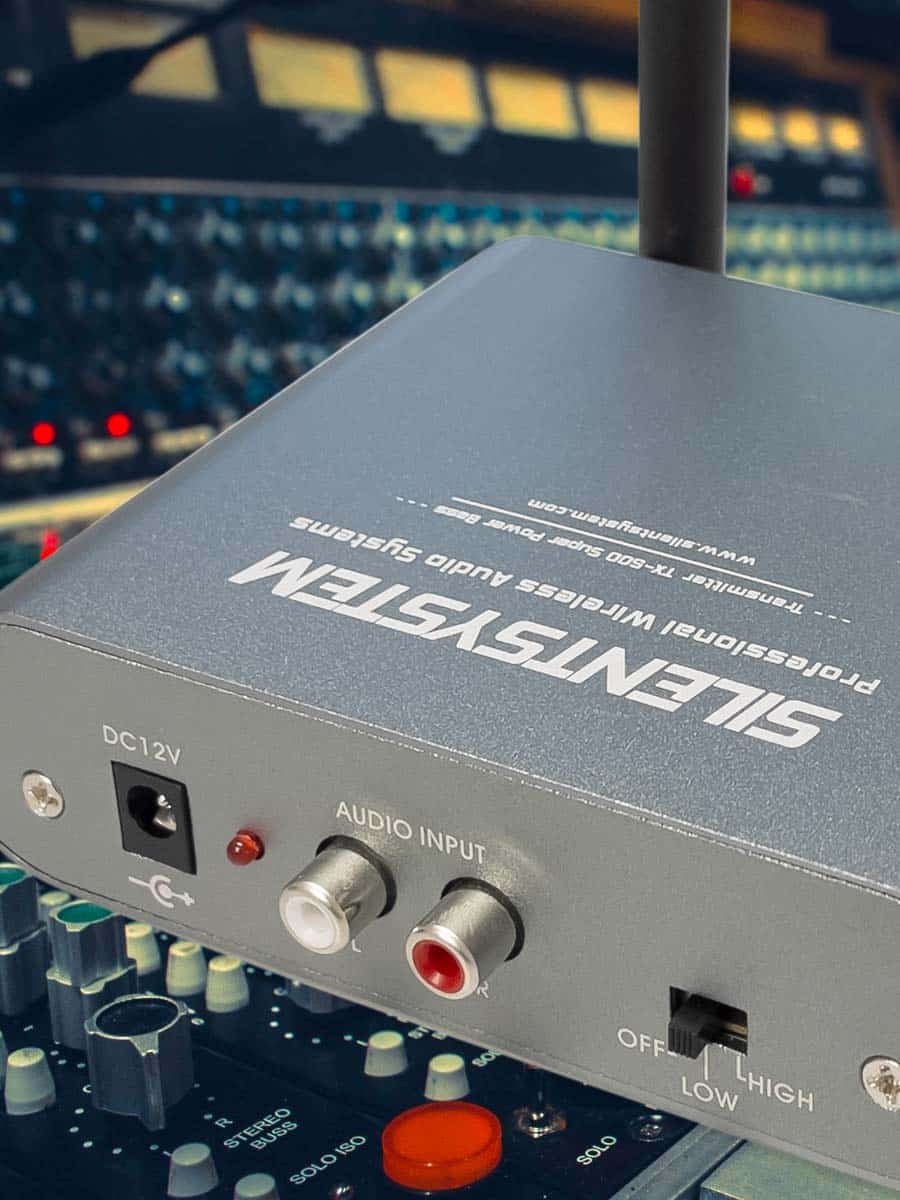
For a better understanding of how these systems are built, check out our guide to RF audio systems for silent events, which explains the wireless technologies used at professional events.
RF transmitters are used for silent disco, silent concerts, conferences, guided tours, museums, live podcasts, fitness, yoga, open-air cinema, weddings and corporate events: anywhere audio needs to reach many listeners at once, clearly and reliably.
In a professional system, the RF transmitter takes audio from a source such as a mixer, microphone, computer, video control room or controller and converts it into a radio signal that’s picked up by compatible wireless headphones.
What are RF transmitters?
An RF transmitter is a device that takes an audio signal and converts it into a radio signal for compatible wireless headphones. It’s one of the core components of professional wireless audio systems for events.
The transmitter doesn’t just send the audio: it also determines signal stability, audio channel management and overall transmission quality throughout the event.
- stable wireless audio transmission
- many headphones connected simultaneously
- management of one or more audio channels
- indoor and outdoor use
- integration with audio control rooms and professional setups
How RF transmitters work
The process is simple, yet extremely effective for events with lots of participants.
- The audio source is connected to the RF transmitter.
- The transmitter converts the audio signal into radio frequency.
- The signal is broadcast across the event area.
- The wireless headphones receive the signal and play it back.
This lets many people listen to the same audio at the same time or, with multichannel systems, choose different content right from their headphones.
For a more technical explanation, see our guide on how headphones and transmitters work for silent events.
Portable vs. fixed transmitters
| Type | Features | Uses |
|---|---|---|
| Portable transmitters | Compact, lightweight and battery-powered | guided tours, silent walks, education, fitness, yoga |
| Fixed transmitters | Installed at the audio control position with professional inputs | silent disco, conferences, live podcasts, open-air cinema |
Silentsystem transmitter models
Silentsystem develops several RF transmitter models designed for different needs, from on-the-go use to professional events with complex audio control setups.
TX-100
The TX-100 is a compact RF solution for wireless audio applications and event systems.
TX-300
The TX-300 is a portable transmitter designed for guided tours, company visits, education and roaming events.
TX-330
The TX-330 is a portable RF transmitter used for active sessions and lightweight setups.
TX-350
The TX-350 is a fixed transmitter suited to audio control rooms and professional event systems.
TX-400
The TX-400 is an RF transmitter designed for events that demand high signal stability.
TX-500
The TX-500 is a professional transmitter used for silent disco, concerts and multichannel conferences.
Key technical features
| Feature | Why it matters |
|---|---|
| Number of channels | Lets you broadcast multiple audio feeds at the same event. |
| Audio inputs | Professional models include XLR or RCA inputs for audio control setups. |
| Portability | Portable models are ideal for roaming events. |
| Headphone compatibility | Transmitter and headphones must use the same RF system. |
| Signal stability | Essential for events with lots of participants. |
To understand the differences between the wireless technologies used at events, you can also read our guide on RF vs. Bluetooth and Auracast at events.
Main uses for RF transmitters
RF transmitters are used in a wide range of settings where wireless audio needs to reach many participants at the same time.
| Application | Description |
|---|---|
| Silent disco | Music events with multiple DJs or simultaneous playlists heard on headphones without disturbing anyone. |
| Silent concert | Concerts and music performances where the audience hears the audio directly in their headphones. |
| Conferences and conventions | Audio distribution for speeches, simultaneous interpretation, parallel sessions and breakout rooms. |
| Guided tours and silent walks | Tours for large groups where the guide’s voice goes straight to the headphones. |
| Museums and immersive installations | Museum routes, interactive exhibitions and art installations with individual headphone audio. |
| Live podcasts | Spoken-audio events and live recordings with headphone listening for audiences and speakers. |
| Silent fitness | Workouts and fitness classes where the instructor and music go straight to the headphones. |
| Silent yoga | Yoga and meditation sessions with the instructor’s voice and music delivered through headphones. |
| Open-air cinema | Outdoor movie screenings with no sound spilling into the surroundings. |
| Silent disco weddings | Music parties at venues with noise restrictions or in sensitive settings. |
| Recording studios | Professional audio setups with wireless headphone monitoring. |
| Education and exams | Educational applications, language labs and school training activities. |
| Art and theater | Immersive performances, theater shows and cultural installations with headphone listening. |
How to choose the right model
- number of participants
- number of audio channels
- venue size
- type of audio source
- need for mobility
- type of audio connections required
FAQ
More helpful guides
RF wireless headphones for events
Headphones for silent disco, conferences, museums, tours, and installations.
How headphones and transmitters work
The complete guide: components, transmission, frequencies, and choosing the right system.
RF audio systems for events
How wireless audio systems work for events, conferences and installations.
All guides
Technology, applications, and standards for wireless event audio systems.
Have an event coming up?
Tell us about your event: we’ll help you choose the headphones, transmitters, and configuration. You can also call us at +39 338 155 5535.