How headphones and transmitters work for silent events
Wireless audio systems for silent events deliver audio straight to the headphones, with no sound spilling into the space. This guide explains, in simple but technical terms, how RF wireless headphones and RF transmitters work, which frequencies are used, how a system is configured, and how standard solutions differ from professional multichannel systems.
This guide is for: event organizers, agencies, DJs, audio engineers, museums, companies, venues, and anyone who wants to figure out which system to choose for silent discos, conferences, guided tours, and professional wireless audio applications.
What is a silent event audio system?
A silent event audio system is made up of one or more audio sources, one or more RF transmitters, and any number of wireless receiver headphones. Instead of hearing sound from speakers, each participant receives the signal directly in their headphones.
It’s used in many settings:
What the system is made of
Audio source
Where the content starts: a mixer, DJ console, microphone, computer, video control room, or media player.
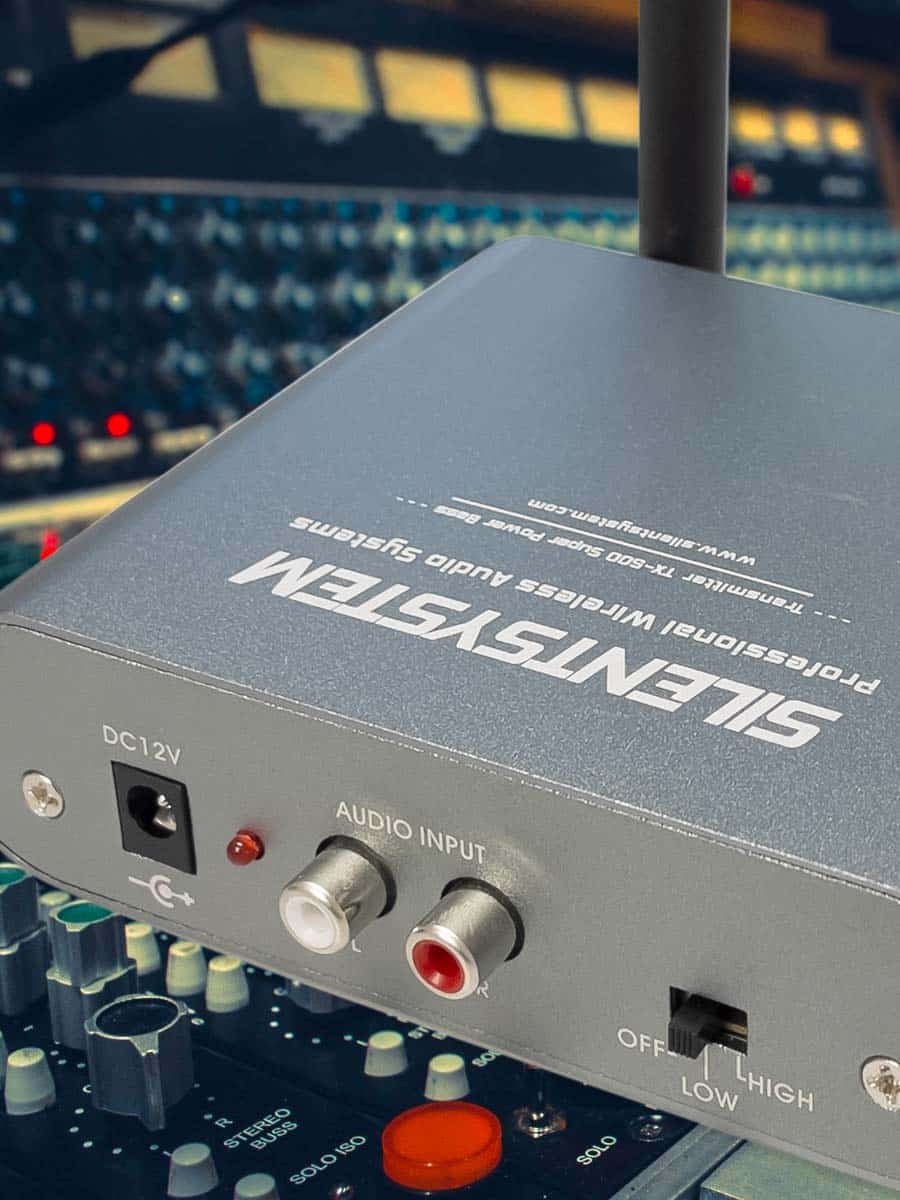
RF transmitter
It receives the audio signal and converts it into a radio signal on the selected frequency. Event models are listed in the wireless audio transmitters section.
RF wireless headphones
They receive the radio signal, let you choose the channel, and play back the audio. See the models on the wireless headphones for events page.
Power and accessories
Power supplies, audio cables, splitters if needed, charging systems, flight cases, and accessories for running the event.
How audio transmission works
The principle is simple: the source sends the signal to the transmitter, the transmitter converts it into a radio signal, and the headphones receive it on the selected frequency or channel.
In a multichannel system, each transmitter runs on a different channel, and each listener chooses which stream to hear right from the headphones.
Why professional systems use RF, not just Bluetooth
Consumer Bluetooth headphones are designed for personal use; RF event systems deliver audio to many people at once, instantly. To learn more, read our RF vs. Bluetooth vs. Auracast at events guide.
| Consumer Bluetooth | Professional RF systems |
|---|---|
| Requires pairing between devices | Instant connection on the selected channel |
| Better suited to personal use | Better suited to events with many headphones |
| Limited scalability | Many headphones at the same time |
| Less practical for multichannel live formats | More practical for silent discos, conferences, and tours |
Which frequencies silent systems use
Standard 3-channel systems
The most common silent systems use the 863–865 MHz band: it’s the typical setup for three-channel systems, widely used for silent discos, guided tours, promotional activations, and standard events.
Professional multichannel systems
When more than three channels are needed, professional UHF bands such as 500–600 MHz and 640–672 MHz are often used: they allow more advanced frequency management for conferences, complex events, and situations that call for more flexibility.
In short: 863–865 MHz is typical of 3-channel systems, while 500–600 MHz and 640–672 MHz are professional ranges for multichannel systems. Learn more about multichannel audio systems.
How to choose headphones and transmitters for silent events
The choice isn’t just about price or looks. The criteria that really matter are:
- number of channels needed
- frequency band used
- RF link stability
- ease of use for the audience
- audio quality
- headphone battery life
- ease of operational management
- technical documentation and system compliance
For equipment standards, compliance, and safety, see our RF standards and safety page.
How it works: FAQ
More helpful guides
RF wireless headphones for events
Headphones for silent disco, conferences, museums, tours, and installations.
RF transmitters for events
How RF transmitters work and which models are used.
RF vs. Bluetooth vs. Auracast
A comparison of the wireless audio technologies used at events.
All guides
Technology, applications, and standards for wireless event audio systems.
Have an event coming up?
Tell us about your event: we’ll help you choose the headphones, transmitters, and configuration. You can also call us at +39 338 155 5535.