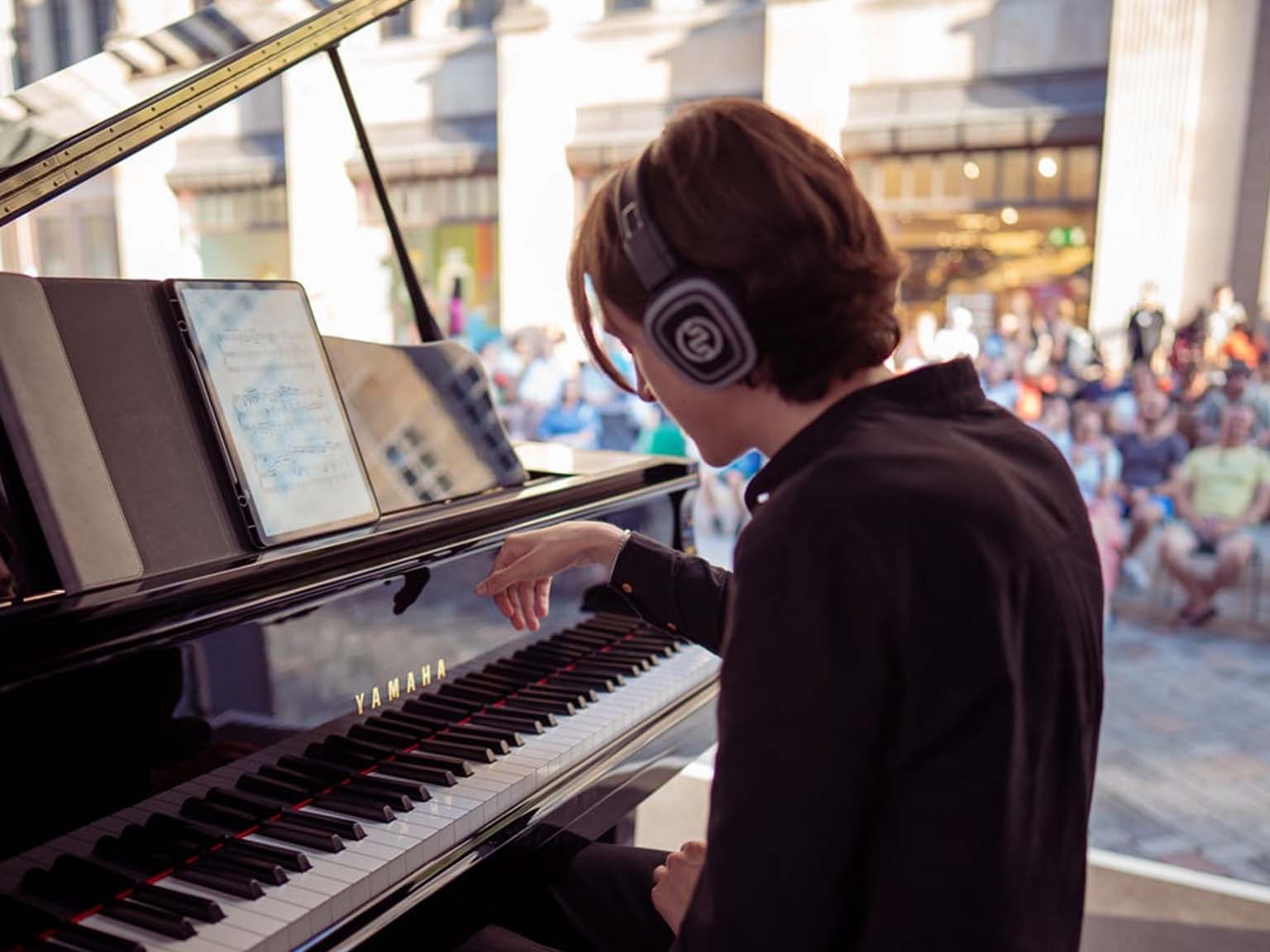
The sound is transmitted directly to the audience’s headphones, making it possible to stage piano concerts in unconventional places — museums, archaeological sites, art installations, natural settings and high-altitude locations — without a traditional sound system.
The Yamaha Silent Experience project
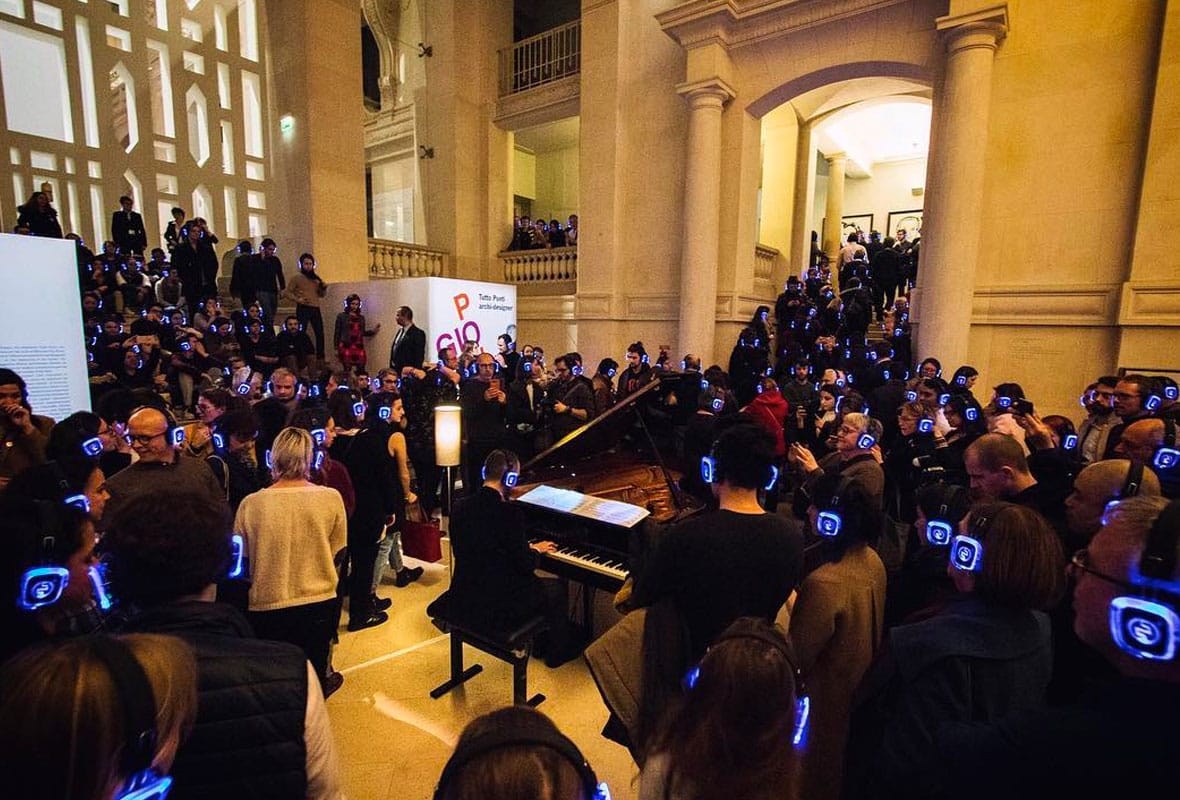
Yamaha Silent Experience reimagines the piano concert through individual headphone listening. The audience doesn’t have to stay seated in front of a stage: they can move through the space, explore the venue and keep listening to the piano directly on Silentsystem wireless headphones.
The technology changes the relationship between music and place. The concert is no longer tied to a traditional amplification system and can move into settings where a sound system would be difficult, intrusive or simply incompatible with the space.
The key point: not using headphones to make a traditional concert “silent,” but using wireless listening to make possible a concert that, in that form and in that location, couldn’t happen otherwise.
The challenge: taking music beyond the stage
A classical concert is usually built around a specific acoustic space: stage, audience and sound reinforcement all share the same area. Yamaha Silent Experience turns that logic on its head.
By sending the piano signal straight to the headphones, the listener’s position no longer determines the quality or level of what they hear. Audience members can sit a few feet from the pianist or move around the venue while receiving the same audio program.
Direct listening
The piano signal goes straight to the audience’s headphones, regardless of where listeners are relative to speakers.
Freedom of movement
Audience members can move through the space during the performance, making the venue an active part of the experience.
No traditional PA
With no amplification system projecting into the room, the format opens up to venues with special acoustic, artistic or architectural requirements.
Shared yet personal listening
The audience shares the same performance at the same moment, yet every participant has their own individual listening point on headphones.
How the system works
The system pairs the Yamaha piano with Silentsystem’s RF infrastructure. The audio signal is sent to the transmitters and delivered wirelessly to the headphones worn by the audience.
RF transmission lets a large number of people receive the same content at the same time, with no individual pairing. Coverage is sized to the venue, so the listening area is built around the project instead of adapting the project to a traditional sound system.
The headphone becomes the listening point. The music follows listeners as they move, separating the listening position from the physical position of the piano for the first time.
Concerts in unconventional venues
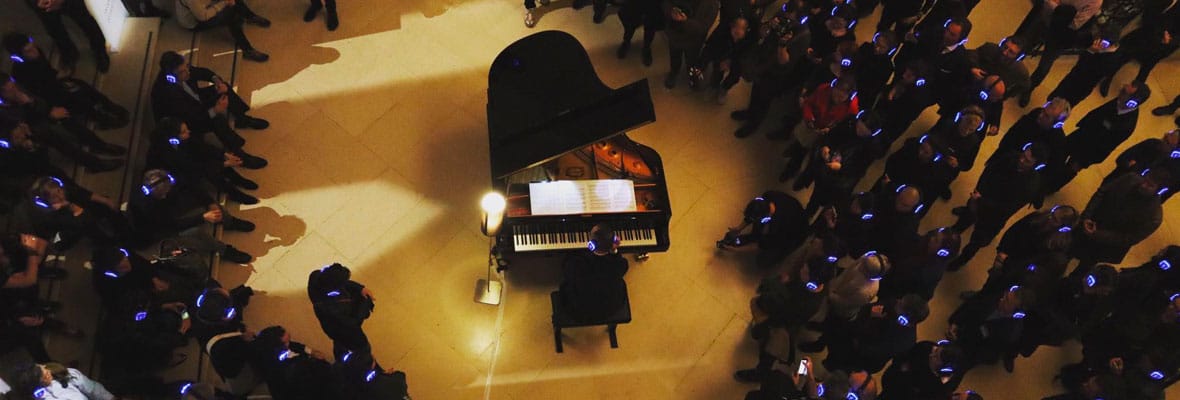
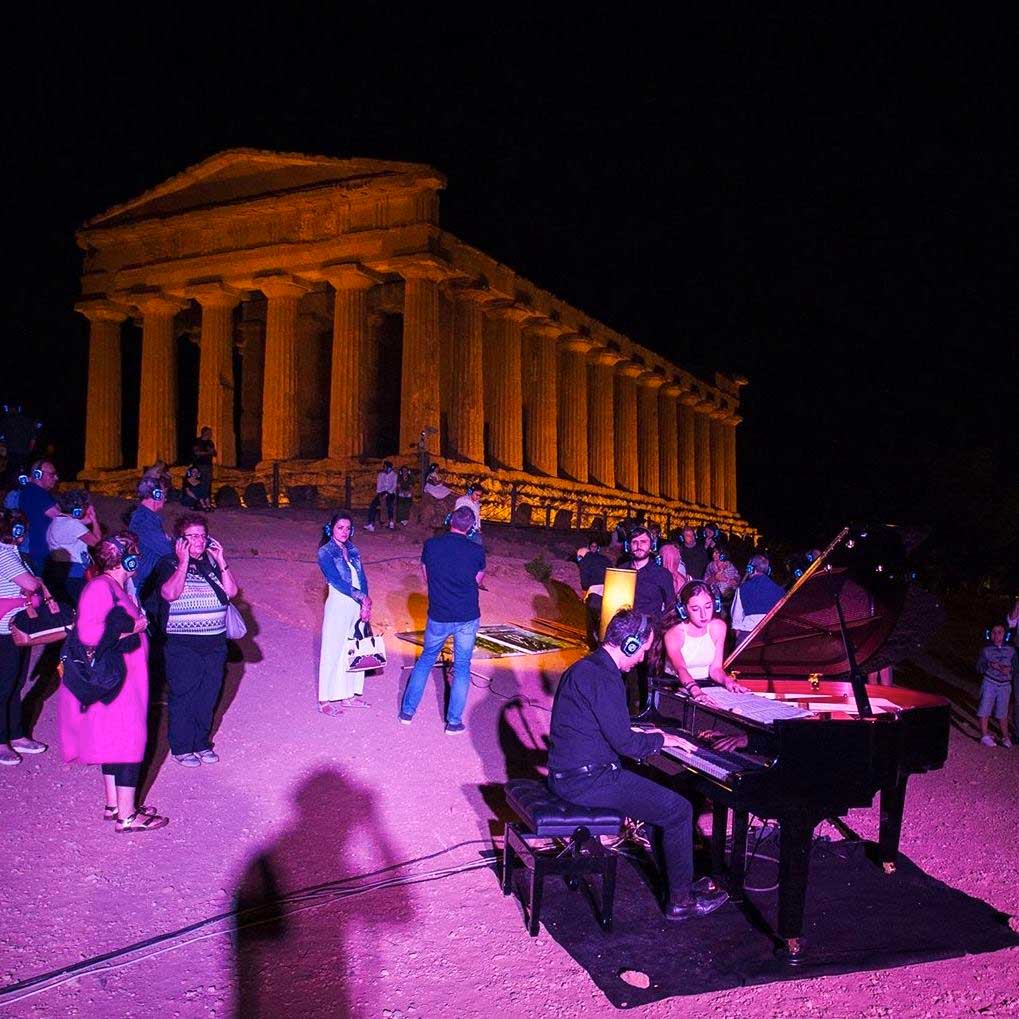
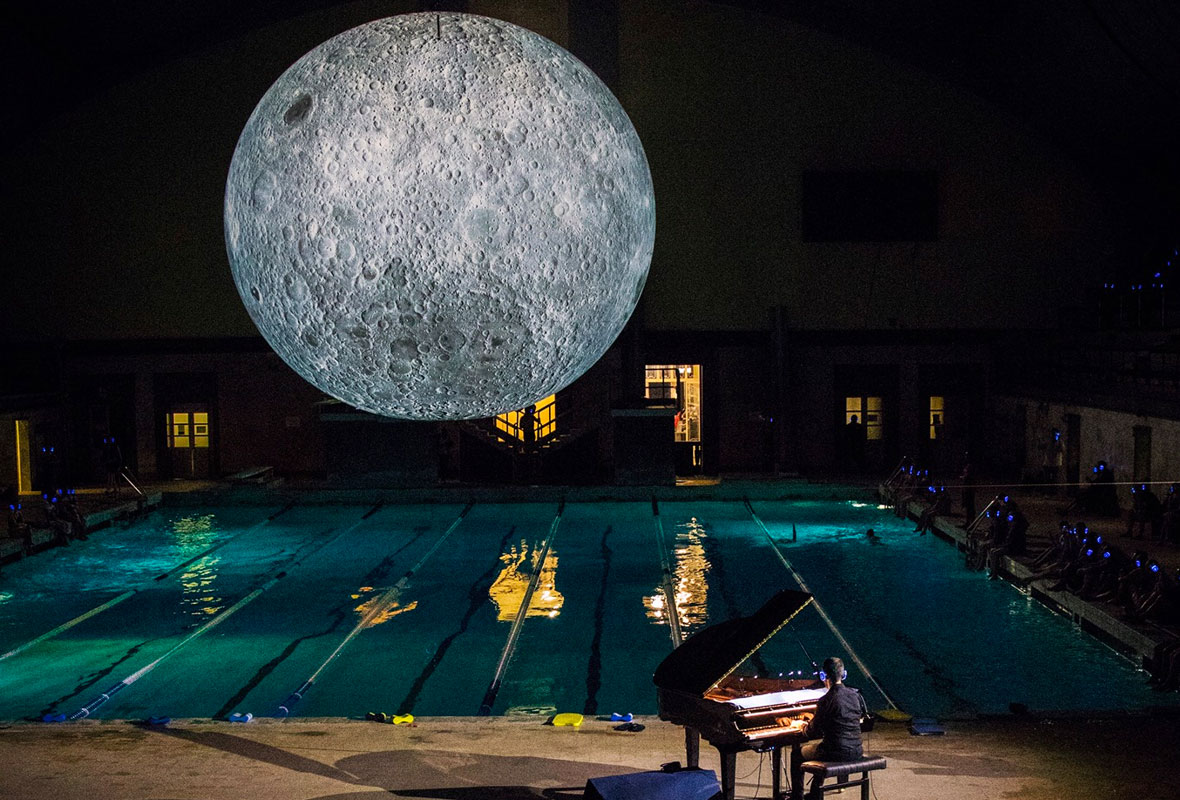
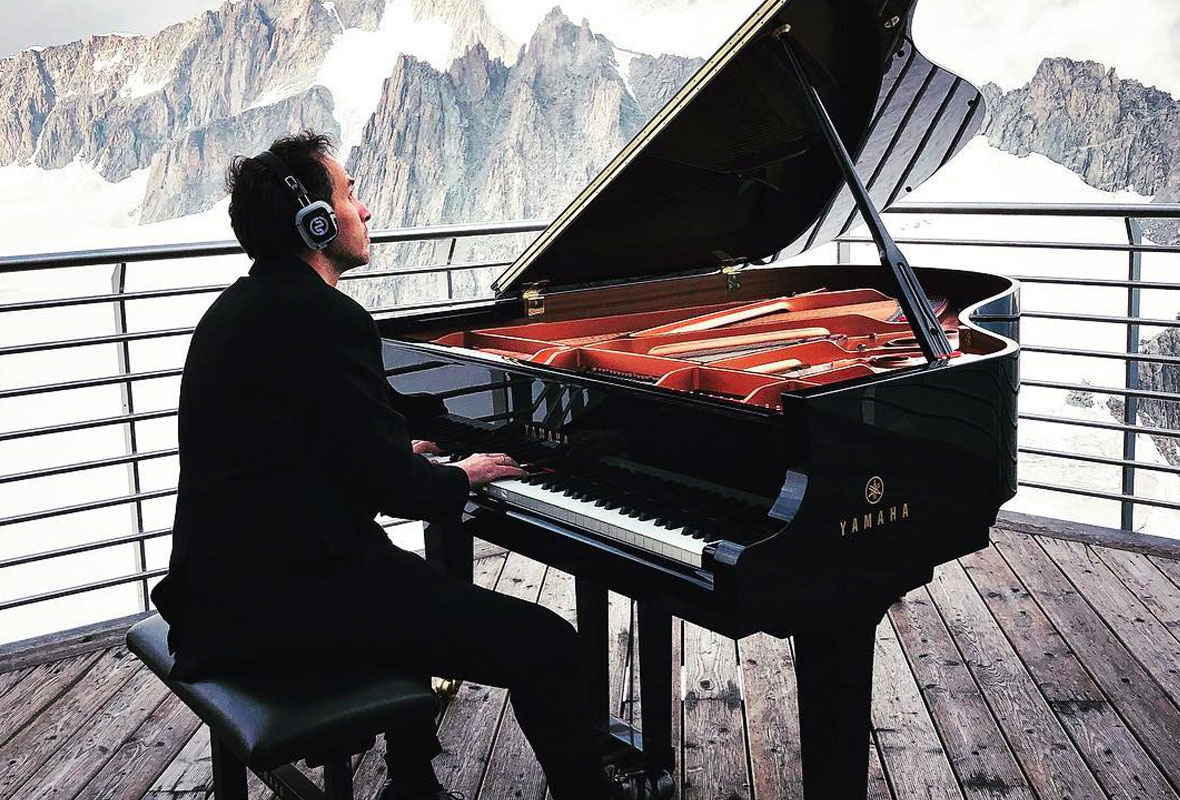
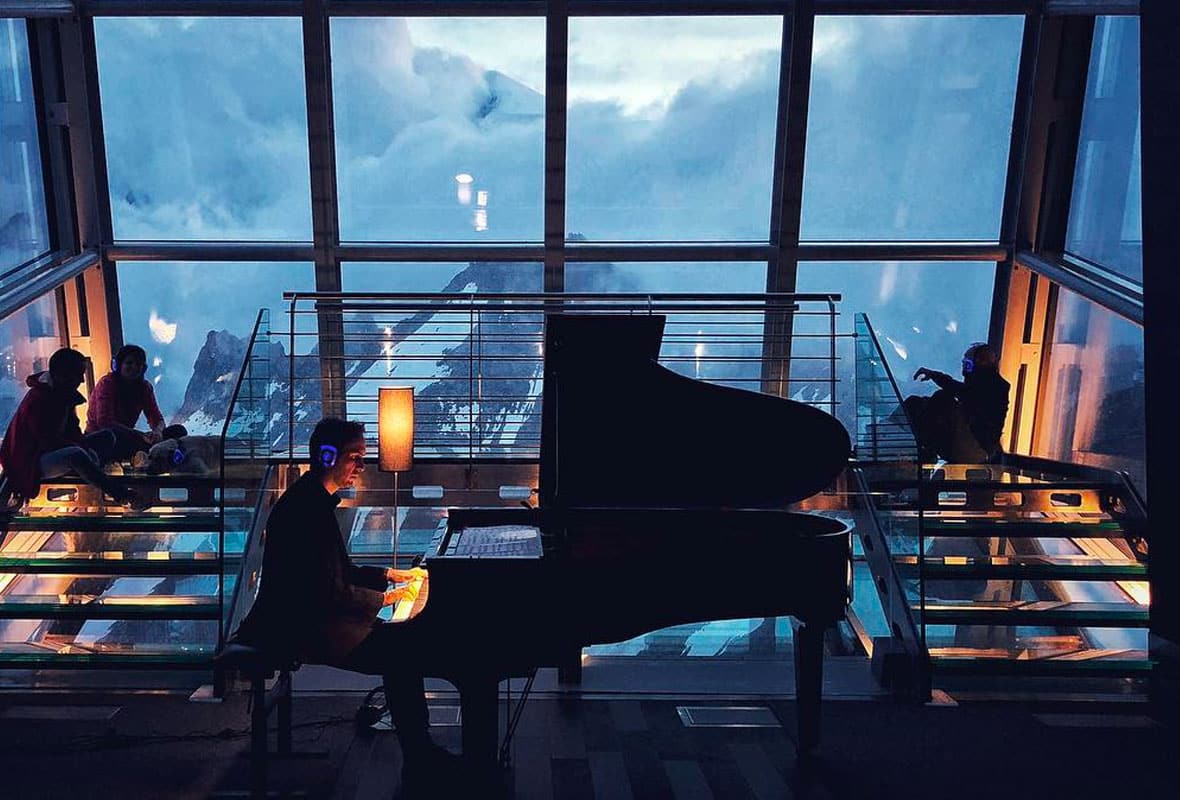
It’s exactly this capability that has allowed Yamaha Silent Experience to move beyond the venues traditionally associated with classical music. The format has been taken to strikingly different settings: from the Louvre in Paris, where the audience could walk among the artworks while still listening to the concert, to the Valley of the Temples, to the Museum of the Moon, and to high-altitude performances at Punta Helbronner, on Mont Blanc.
THE VENUE DOESN’T JUST HOST THE CONCERT.
It becomes part of the experience, while the music keeps reaching every listener directly through their headphones.
In a museum, the audience can walk through the galleries; at a historic or archaeological site, people can listen without installing an intrusive sound system; outdoors, the concert can spread across a wider area; at a high-altitude location, the technology makes it possible to imagine a performance far removed from the typical concert hall setup.
| Setting | What the wireless system makes possible |
|---|---|
| Museums and art spaces | The audience can move among artworks and rooms while listening to the performance directly on headphones, with no conventional sound system in the galleries. |
| Historic and archaeological sites | The concert can take place in especially delicate locations or in spaces not designed to host a traditional audio system. |
| Art installations | Music, space and visual art can be experienced at the same time, leaving listeners free to move around. |
| Natural and outdoor spaces | The audience isn’t tied to a traditional speaker array, and the listening area can be designed around the location. |
| High-altitude locations | The format makes it possible to stage performances in extreme, unconventional settings where the logistics of a classical concert would be especially complex. |
Silentsystem’s role
In Yamaha Silent Experience, the headphones aren’t an add-on to the concert: they’re what makes the format possible. Silentsystem provides the RF wireless listening system and sizes the setup to the number of participants, the spaces and the characteristics of the venue.
The result is an infrastructure that keeps the direct connection between piano and listener intact even when the audience is moving, when there’s no real stage, or when the venue itself becomes part of the performance.
Watch Yamaha Silent Experience in action
The video shows the idea behind the format: the pianist, the audience wearing Silentsystem headphones, and a space that stops being a mere backdrop and becomes part of the musical experience.
Gallery

More helpful guides
Silent disco and silent party
How a silent disco works and what equipment you need.
Conferences and simultaneous interpretation
Wireless audio systems for conventions, trade shows, and multilingual events.
Headphone distribution
How to organize headphone handout and collection while cutting down wait times.
All guides
Technology, applications, and standards for wireless event audio systems.
Take a concert where it normally couldn’t go
Silentsystem designs wireless listening systems for concerts, performances, museums, installations and unconventional venues. The setup is sized to the space, the audience and the artistic project. Or reach out: Rent headphones online.